
People looking into dog training often ask the same question early on: what tricks will the dog learn? Sit, down, shake hands, roll over, play dead. It’s an understandable question. Tricks are easy to see and easy to count.
But the number of tricks a dog knows says very little about whether that dog is trained. Good training isn’t for party tricks. It’s for a dog that is calm, confident, and polite, a dog you can take anywhere and who fits into the life you actually live.
The Problem With “Obedience” as the Goal
In its usual sense, “obedience” means a dog that performs a command when told. Say “sit,” the dog sits. Say “down,” the dog lies down. Programs built on this idea often end with a certificate or a demo of commands performed on cue in a quiet room.
The trouble is that commands without context don’t carry over to real life. A dog can have a perfect sit in the living room and still lunge at motorcycles on the sidewalk, bark nonstop at the guard in the lobby, panic when the lift doors open, or drag you toward every stray cat on the street. The dog “knows” sit. They just can’t use it when it matters, because nobody taught them how to stay calm in those places.
There’s a second problem. A dog trained only to follow commands is always waiting for the next instruction. A well-trained dog makes good choices without being told. They settle when the household gets busy, walk past strays without a fuss, and greet visitors without jumping.
None of this means tricks are bad. Teaching a spin or a high five is fun, gives the dog mental exercise, and can build confidence. Tricks just aren’t the measure of a trained dog.
What a Trained Dog Actually Looks Like
A trained dog is easiest to recognize in ordinary situations:
- Walking on a loose leash down a busy sidewalk, past tricycles, vendors, and other pedestrians.
- Riding the lift quietly, even when it’s crowded or another dog gets on.
- Settling beside you or under the table at a pet-friendly café or mall.
- Noticing strays and cats without lunging or barking.
- Greeting visitors and building guards politely, without jumping.
- Waiting in a vet clinic’s waiting area without pacing or reacting to every animal that walks in.
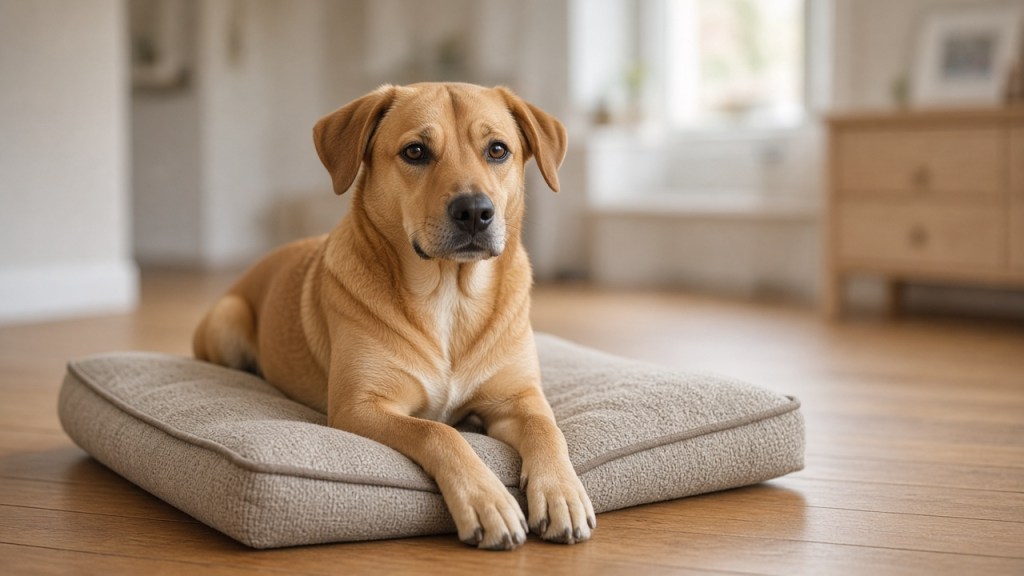
- Resting on their dog bed at home when nothing is going on.
- Coping with horns, construction, and the neighbor’s videoke without falling apart.
None of these are tricks, and most of them aren’t commands. They come from a dog that has learned to stay calm and make sensible choices in the places they actually spend time.
Train for the Life You Actually Live
Training should match the dog’s real day. For most dogs in Metro Manila, that day involves narrow or uneven sidewalks, constant traffic, shared lifts and lobbies, guards, crowds, stray animals, and a lot of noise. Many homes are small, so a dog also needs to be able to switch off indoors without much space to move around.
A program that only trains in a quiet room or an empty field skips the situations that cause the most trouble. Good training builds in stages. It starts somewhere easy, then takes the same skills into busier places: the building lobby, the street outside, a quiet café on a weekday morning, then busier spots as the dog copes well.
Compatibility matters just as much. A family that drives to the province every holiday needs a dog that handles car rides and new places. Someone who works from home needs a dog that can rest quietly through calls. Training should be built around needs like these, not around a standard list of commands.
A Dog’s Life Should Be Bigger Than the Home
A dog that stays inside all day, with a few tricks to show guests, is missing most of what makes life good for a dog. Dogs need to get out, sniff, see new things, meet people, and spend time with their family outside the house. Two walks a day is a reasonable baseline. On top of that come outings: a café, a park, a pet-friendly mall, a trip out of town, a visit to the grandparents. (See The Indoor Dog Is Not a Type of Dog and this list of pet-friendly restaurants in Metro Manila.)
This is the real reason training matters. A dog that’s calm and polite in public gets brought along. A dog that pulls, barks, and panics tends to get left at home, and their world shrinks a little more each time. Training for lifestyle is what keeps that world open for the dog’s whole life.
Relationship Over Command-and-Obey
Command-based training treats the dog as something to control. Relationship-based training treats the dog as a partner to understand, and the difference shows when things get difficult.
Relationship-based training is built on trust and communication. You learn to read your dog: early signs of stress like lip licking, yawning, looking away, or a lowered tail; what worries them; what motivates them; when they need a break. The dog learns that you’re predictable, fair, and safe to turn to when something feels like too much. A dog that trusts their owner checks in with them on a busy street instead of panicking, and that check-in is far more useful than any trick.
This is also why compassion works better than force. Pain, fear, and intimidation can stop a behavior in the moment, but they don’t teach a dog to feel calm, and they cost trust. If the goal is a calm dog, methods that add stress work against it.
Trick-Focused vs Lifestyle-Focused Training
| Trick-Focused Training | Lifestyle-Focused Training | |
|---|---|---|
| Goal | Perform commands and tricks on cue | Calm, confident, and polite behavior in daily life |
| Where it happens | A quiet room or class area | Home, the building, the street, cafés, wherever the dog actually goes |
| Measure of success | Number of commands, a certificate, a demo | How well the dog fits into everyday life |
| Owner’s role | Watches, or receives a “finished” dog | Learns to read, guide, and support the dog |
| Approach | Command-and-obey, sometimes using force | Relationship-based, humane, built on trust |
| Distractions | Kept to a minimum | Gradually built up to real-world levels |
| Long-term result | Behavior that often fades outside the training setting | Skills that hold up in real situations |
Why Training Should Happen With the Owner Present
Board and train programs, where the dog is left with a trainer for days or weeks and the owner is not there to see what happens, carry real risks. When you can’t watch the training, you can’t know how the dog is being handled. Some dogs come home quieter because they learned something useful. Others come home quieter because they were scared into shutting down, and that kind of “progress” often falls apart once the dog is back in daily life. In the worst cases, dogs are abused or mistreated while out of sight.
There’s a deeper reason to keep the owner in the room. The trainer is temporary. The dog will live with you for the rest of their life. Relationship-based training is between the dog and the human who shares that life. The trainer’s job is to train the human: how to read the dog, how to guide them, and how to keep the progress going after the program ends. A dog that only behaves for the trainer was never really trained for your life.
What to Ask When Choosing a Training Program
These questions tell you far more about a program than a count of tricks:
- Does the training happen in real-world settings? Sessions should move beyond the training area to sidewalks, lobbies, lifts, and public places.
- Does it teach you, the owner? The dog lives with you, not the trainer. A good program shows you how to handle situations yourself and keep progress going after it ends. Be wary of board and train setups where the dog is left with the trainer and you never see how the work is done.
- Is it relationship-based and humane? Ask what happens when the dog gets something wrong. Clear answers about rewards, management, and setting the dog up to succeed are a good sign. Methods that rely on pain, fear, or intimidation are a red flag.
- Does it build calm behavior around distractions? Ask how the program handles other dogs, strays, traffic, crowds, and visitors.
- Is it built around your dog and your daily life? A good trainer asks about your dog’s age, temperament, and fears, plus your home, your routine, where you walk, who visits, and where you want to take your dog. A fixed checklist that’s the same for every dog is a sign the program is about commands, not your life.
- How is progress measured? Look for answers about real situations, like calmer walks, quieter lift rides, or settling at a café, rather than a list of commands or a certificate.
The True Measure of a Trained Dog
At the end of any program, the useful question isn’t how many commands the dog can perform. It’s whether you can take your dog on the morning walk, to a café, to your parents’ house, or on a trip, and have them stay calm, confident, and polite. It’s whether your dog looks to you when something unsettles them, and rests easily at home.
A dog who can do all that is well trained, with or without a single trick. How well the dog is integrated into your life and how strong your bond is, that is the true measure of a successful dog training program.
Leave a Reply