
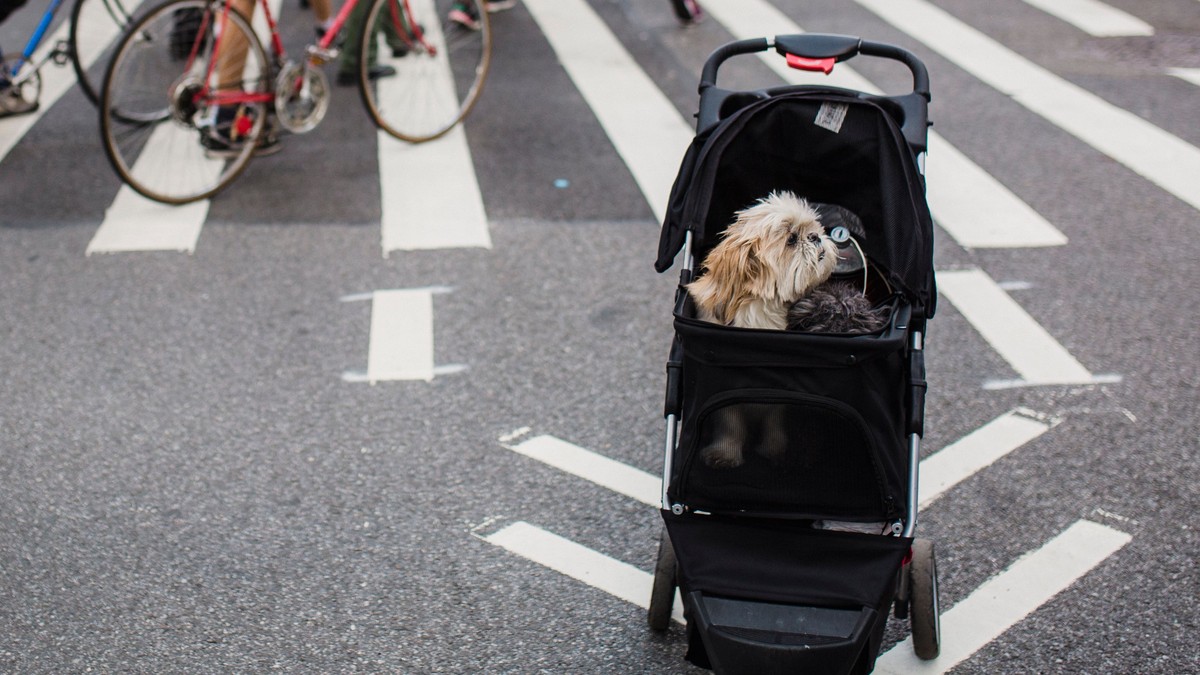
Walk through any mall or park in Metro Manila on a weekend and you’ll see them: dogs riding in strollers, looking out at the world from behind a mesh window. Some are tiny puppies, some are fluffy toy breeds, and some are big enough that the stroller looks a little crowded.
It’s easy to see why strollers have caught on. Many owners love their dogs like family, and plenty think of them as their babies. Babies need strollers, so it feels natural to get one for the dog too.
But dogs aren’t babies. A healthy dog has four strong legs and a nose built for exploring. For most dogs, the stroller takes away the very things an outing is supposed to give them. There are some good reasons to use one, though, and they’re worth knowing.
Why Strollers Became So Popular
Strollers feel safe and convenient. They keep a small dog away from hot pavement, crowds and other dogs. They make it easy to bring a dog into a mall or cafe. And they look cute.
Underneath all that is a kind and loving instinct: wanting to protect someone small. The trouble is that treating a dog like a baby can quietly work against what the dog actually needs.
What a Stroller Can Cost a Healthy Dog
They don’t use up their energy
A walk isn’t just a trip from point A to point B. For a dog, it’s exercise, mental work and a chance to burn off energy. A dog who rides through an outing comes home with all that energy still bottled up, and it often comes out later as zoomies, chewing, restlessness or barking at home. There’s more on this in The Downside of Weekend Dogs.
They miss out on sniffing and exploring
Sniffing is how dogs read the world. A few minutes of nosing around a patch of grass gives a dog a lot to think about, and it’s one of the most calming, satisfying things a dog can do. From inside a stroller, the world is something to look at, not explore.
They miss out on learning to handle the world
Every walk is a lesson. On their own feet, dogs learn how to pass a stranger, step around a noisy motorbike, ignore a cat, and stay calm near other dogs. That everyday practice is a big part of socialization. A dog that rides everywhere sees the world but doesn’t learn to cope with it. For more on why this matters so early, read Week 4: Why the Socialization Window Starts Earlier Than Most People Think.
Barking and guarding
This one surprises many owners. Over time, a lot of dogs start treating the stroller as a little piece of home, their own space on wheels. And just like some dogs guard the gate or the front door, they start guarding the stroller.
Another dog walks past and the stroller dog barks. A person leans in to say hello and gets barked at. The dog can’t move away, so it does the only thing it can: it makes noise. Every time the other dog or person leaves, the dog learns that barking worked. That’s how strollers can encourage reactivity and excessive barking.
Meeting the world from a trapped position
Think about how a dog meets others from a stroller: raised up, closed in, and unable to step back or sniff politely the way dogs normally greet each other. Being stuck with no way out can make a nervous dog more anxious, and an anxious dog more likely to bark or snap.
When a Stroller Makes Sense
None of this means strollers are bad. They’re a tool, and there are times they genuinely help.
1. Young puppies before their first round of vaccinations
Puppies shouldn’t walk on public ground until they’ve had their first round of shots, but they still need to see and hear the world during this important time. Here, though, carrying the puppy is usually enough. It’s a short period, and young puppies are light. Holding a pup in your arms lets it watch people, traffic and other dogs from a safe spot, and it stays close to you while it does. A stroller isn’t really needed.
2. Senior dogs with sore joints or difficulty walking
An older dog with joint pain, or one who tires after a short distance, can still love being outside. A stroller lets them join the family on longer outings, enjoy the smells and sights, and not miss out. The best approach is to combine it: let the dog walk the part they can manage comfortably, then ride the rest.
3. Dogs with health or breathing issues
Some dogs have a health condition that makes long walks hard. Flat-faced breeds like Pugs and French Bulldogs can struggle to breathe and overheat easily, especially in Philippine heat. A stroller can give them a rest and some shade when they need it.
4. Dogs who can’t walk
For any dog that is physically unable to walk but still enjoys being outdoors, a stroller is a wonderful way to give them fresh air, new smells and time with their family. This is exactly what strollers are good for.
If You Do Use a Stroller
A few simple habits keep a stroller helpful rather than harmful:
- Let the dog walk whenever possible. Even part of the way. Use the stroller for rests, not the whole trip.
- Don’t let the dog bark or guard from the stroller. Keep some distance from other dogs and people, and keep things calm. If the dog starts to bark, move away rather than letting it continue.
- Don’t use it to avoid working on reactivity. If a dog barks or lunges at other dogs on the leash, the stroller can hide the problem, but it won’t fix it. Training will.
- Walk in cooler hours instead. Early morning and evening are usually much kinder on paws and lungs than midday. Often, changing the time of the walk solves the heat problem without needing a stroller at all.
Back to Four Feet
Most dogs need walking, not riding. A good guideline is two outdoor walks a day, at least 45 minutes each. That gives a dog time to move, sniff, burn energy and practice being calm around the world. Every dog needs this, whether they live in a house or a condo; see The Indoor Dog Is Not a Type of Dog.
And when good behavior on those walks is rewarded, dogs learn fast. Rewards Are Not Bribes: What Treats Really Do in Dog Training explains how.
The goal is a dog you can take anywhere, calm, confident and happy, on its own four feet.
FAQ
My dog is small. Doesn’t that mean it needs a stroller?
Not usually. Small dogs have plenty of energy and need walks, sniffing and practice with the world just as much as big dogs do. Size alone isn’t a reason to ride. For more on how dogs of different sizes grow, see Puppyhood, Adolescence and Adulthood: How Dogs Grow Up, and Why Size Matters.
Why does my dog bark so much when it’s in the stroller?
Many dogs start to treat the stroller like their own space and guard it. They also can’t move away from things that worry them, so they bark instead. More walking and some distance from other dogs usually help.
Is it okay to use a stroller in the mall?
If a place requires it, sure. Just make sure the dog still gets its proper daily walks, and keep things calm around other dogs and people.
What about the heat?
Walking in the early morning and evening is the simplest fix. Strollers are most useful for dogs that truly struggle in the heat, like flat-faced breeds or dogs with a health condition.


Leave a Reply